up
of
down

Scott Belsky, Making Ideas Happen

Colle+McVoy FeedIt Scott Belsky

About Scott

According to Fast Company, Scott is one of the "100 Most Creative People in Business." He's accomplished this by founding Behance, the world's leading online platform for creative professionals. Over the years, Behance has developed a series of products to help organize and empower the careers of creative professionals. Scott is also the author of the national bestselling book Making Ideas Happen.

Making Ideas Happen

Scott Belsky presented as part of Colle+McVoy's FEED IT inspirational series on July 15, 2011. While he was here, Scott discussed common practices shared by the most productive creative teams worldwide. We sat down with Scott for an exclusive interview in the hopes of gathering his insights on how we, as marketers, can increase the possibility of our ideas being shared with the world. In short, how we can make ideas happen.


Taubman Shopping Centers: Yearbook Yourself iPhone Application

Yearbook Yourself App Screenshots

The Yearbook Yourself iPhone app launched for Taubman malls around the back-to-schools season. The app was named a Staff Favorite by Apple and appeared on the iTunes® top paid app list for weeks.

View Case Study »

Land O’Lakes: Appealing To The Next Generation of Moms

Land O'Lakes Site Redesign

Visit the site: www.landolakes.com »

Solution

A completely redesigned landolakes.com helps consumers interact with the established brand in new ways. Built to appeal to both less-experienced, tech-savvy moms and more-seasoned cooks and bakers, the site features a modernized color palette, engaging photography and better social connectivity. The Test Kitchen section highlights the brand’s expertise with tips, photos and how-to advice. Intuitive searching gets you to great recipes quickly. And recipe pages are designed with the user in mind, featuring enhanced functionality, while themed collections trigger more ideas. With more than 3,000 recipes and 5,000 pages, sharing the simple goodness of everyday food has never been more user friendly.

Challenge

Land O’Lakes has been a key ingredient in America’s kitchens for generations. But there was an opportunity for its interactive experience to connect with a new generation of consumers — and continue to make sure longtime visitors felt right at home.

Caribou Coffee: Wild It Up!

Caribou Coffee Wild It Up

Solution

At the time of the promotion, Caribou Coffee did not have an official page on Facebook. For a brand that’s about fun and customer engagement, this project served as the perfect foray into the space. After developing an official page, we created the Facebook application Wild It Up!, which allowed consumers to “wild up” a photo of themselves by selecting from a diverse library of images, such as gold teeth, wild animals, tattoos and, of course, Wild beverages. Users could then use a printout of their new Wild It Up! picture at any Caribou Coffee to redeem it for a free Wild Cooler. The pictures were displayed in stores, reinforcing Caribou’s customer-centric spirit. And an untold number of coupons were distributed that created millions of impressions. Product sampling took a new form of ROI as Caribou’s Facebook audience grew from 0 to 150,000 in just one month’s time.

Challenge

Shortly after winning the Caribou Coffee business, we were given the task of helping solve a perennial problem. The summer months have a way of slowing down coffeehouse sales. So we turned to Caribou’s lineup of Wild Coolers to offset the usual dip when the mercury rises. Since the beverages are popular with a younger audience, there was an opportunity to broaden Caribou’s customer base in a space that was still uncharted for the premium coffeehouse: social media.

Colle+McVoy: Squawq Case Study

Collemcvoy - Squawq

Visit the site: squawq.com »

Solution

Since it didn’t exist, we created it ourselves. Squawq™ leverages the Twitter API and features an intuitive user interface where brands can analyze tweet volume, popular keywords, hashtags, most-vocal authors and frequently shared links. By logging into Squawq via Twitter, users can access the application using their existing Twitter credentials. Within months of launch, Squawq generated thousands of users, actively monitored 100 tweets per second, and stored more than 75 million tweets to the database. Not to mention it provided a much-needed ear to the ground for our clients.

Challenge

As Twitter continued its massive growth in late 2009, we wanted to figure out an easy and intuitive way to track what people were saying about our clients’ brands on the microblogging platform. At the time, a one-stop application that let a brand easily monitor tweets about its brand was nonexistent in the marketplace.

Schwinn: Bike It Forward Case Study

Bike It Forward

Solution

With spring approaching, we set our sights on National Bike Month in May. After all, if one brand could rightfully own the month, it’s Schwinn. We then created a campaign to celebrate 31 days of bicycling goodness. Bike It Forward let users spread the joy of May Bike Month by choosing a friend on Facebook to win a new Schwinn. To demonstrate the lineup, users could choose from all categories, including Urban, Hybrid, Road, Mountain, Cruiser and Kids. And to reward their kindness, if a friend won, they won a new bike, too. Banners, Facebook ads, a satellite media tour and social media mentions from the likes of Summer Sanders and Pee-wee Herman helped drive traffic to the experience. By the end of May, we had increased web traffic by 40% compared to May of the previous year, our Facebook fanbase grew by more than 3,000% and the campaign generated more than 500 million impressions. A joyous May Bike Month, indeed.

Challenge

Schwinn, America’s iconic bike brand, was looking for a way to demonstrate the breadth of their bike products by driving more traffic to SchwinnBikes.com and firmly establish themselves in the social media space.

FEED IT Recap: Scott Belsky

Craig Pladson

“Ideas don’t happen because they’re great or by accident.”

This was Scott Belsky’s answer when I asked what one thing he hoped people would take away from reading his national best-selling book, Making Ideas Happen.

It was an interesting answer, but it prompts an obvious next question, “How then do we make ideas happen?”

While Scott visited Colle+McVoy on July 15, 2011, I sat down with him for an exclusive interview in the hopes of gathering his insights on how we, as marketers, can increase the possibility of our ideas being shared with the world. In short, how we can make ideas happen.

What follows is a brief synopsis of the interview, outlining the five main themes that stood out.

Find Your Work Sweet Spot

Scott has always been passionate about facilitating creative production, which served as the impetus for his transition from working in leadership development at Goldman Sachs to starting Behance, an organization focused on matching the best creative talent with the best creative opportunity. “I needed to do something in a world I’m passionate about and with people I love working with.” But passion alone did not make him successful. He was able to align his enthusiasm for organizing creativity with his unique skills and opportunity streams.

Scott found his work sweet spot, have you?

Be a Student of Your Craft

During our conversation, Scott referred to himself as “a student studying design firms, agencies and creative leaders across industries to understand what they are struggling with.” As a student of organizing the creative world, Scott has identified creative professionals defying the odds and who offer a world of knowledge he can learn from. Whatever your creative craft, obsess over how you can find ways to learn more. Given the accessibility the Internet allows all of us today, this has become easier than ever.

Creativity Is a Responsibility

The name Behance came from the word “enhance,” which means to make something better, and “be,” which means being authentic and never compromising. The mission of Behance is to empower creative professionals to make ideas happen. A focus on pushing ideas to completion initiates a sense of responsibility and accountability among creative professionals. In Scott’s words, “Every artist and every creative mind should not only see their creativity as an opportunity, but also a responsibility.”

Embrace Distributed Creative Production

Advertising agencies focus on gathering all the best creative minds in-house. Scott argues this model is not sustainable because the best creative minds are going to be free radicals. “They’re going to be working on their own terms, wherever they are in the world. And they’re going to have greater output as a result of that autonomy,” Scott explained. He refers to this philosophy as “distributed creative production” and believes agencies need to embrace this idea to flourish.

Focus on Process and Kill Ideas

Ideas are plentiful in the agency world. We invest an incredible amount of time and energy in coming up with insights and ideas that allow a brand to stand out. Scott believes we should dedicate the same amount of resources to discussing how our process is organized. Rather than subscribing to the status quo, he encourages organizations to question process and test different methodologies to influence change. And during the daily execution of an idea, the tendency should be to kill ideas. “When ideas come up, the immune system of a productive creative team needs to quickly quench them in order to keep on track. We should only allow new ideas to take us off track during brainstorms,” Scott pleaded as we wrapped up our interview.

I’ll end this overview with Scott’s favorite quote from Thomas Edison: “Genius is one percent inspiration and ninety-nine percent perspiration.” Executional excellence is vital to making ideas happen. This is also the inspiration behind Scott naming Behance’s think tank The 99 Percent.

So which side are you on, the one percent or the ninety-nine percent? I welcome your thoughts below.

See full Interview »


Job Opportunities

This business is, by its very nature, collaborative. But in an organization as integrated as Colle+McVoy, collaboration takes on a new meaning. Most projects and campaigns here will involve people from numerous disciplines, often performing tasks outside their normal roles, thinking in ways they haven’t had to think in previous jobs, and engaging our clients at an earlier stage than most agencies would find comfortable. If you’re up for the challenges and the opportunities, please get in touch.

Check out our current openings »

Colle+McVoy is an Equal Opportunity Employer.

Caribou Coffee: Make The Cup Case Study

Caribou Coffee Make The Cup

Solution

Colle+McVoy realized that Caribou’s broadest reaching media vehicle was its cups. Millions of cups each year serve as walking billboards or “owned” media. With the brand relaunch, we created a series of cups featuring handwritten “Bouisms” highlighting things worth staying awake for. Building on that momentum, we created MakeTheCup.com, which allowed consumers to tell us what they stay awake for, and possibly land on the next generation of Caribou cups. The consumer promotion spiked site traffic by 26 percent, and 150 of the best submissions made it to millions of new Caribou cups.

Challenge

Despite being the second-largest premium coffeehouse in the world, Caribou Coffee is dwarfed by Starbucks when it comes to ad spending. With such a large spending gap, we needed to find a unique promotion to engage customers in our “Life is short. Stay awake for it.” campaign.

Farm Credit Services: Reimagining An 18 Billion Dollar Institution

Farm Credit Case Study

Solution:

After completing an extensive communications brand audit and key stakeholder interviews, it was apparent that Farm Credit had core equities that could be refreshed across their offices to project a larger, more consistent presence.

We suggested a name change to match customer perceptions and created a new logo and identity system to reinvigorate their brand, convey their strength as leaders in rural lending, and tell the Farm Credit story. In addition, we developed a comprehensive launch with the theme, “Strength in Numbers,” to introduce the refreshed brand, celebrate Farm Credit’s rich history and create a cohesive brand experience. The results have been stellar with both customers and employees embracing the new Farm Credit with enthusiasm.

Challenge:

Farm Credit Services of Mid-America was an $18 billion financial cooperative with an identity crisis. Farm Credit’s business had grown significantly, but its brand was fragmented and inconsistently applied between its local offices. While Farm Credit was well known and trusted as a local lender, it lacked the strong, unified brand presence necessary to compete with national banks.

Yahoo!: Emoticarolers

Yahoo Emoticarolers

The Yahoo! Messenger Emoticons want to spread some holiday cheer. Create a personalized carol, then send them off to the digital doorsteps of your friends and loved ones.

Rhymesayers: Paint It Gold

Rhymesayers - Paint It Gold

Internationally acclaimed hip-hop act Atmosphere wanted to create an online experience to match their much-anticipated release, When Life Gives You Lemons, You Paint That S*#t Gold. To build the hype (and their sales), we created Paintitgold.com, a site that allows users to tag anything they could find on the web while listening to tracks from the new album. In its first week, the site not only unleashed the talents of thousands of virtual vandals, it helped launch the album to the top of the iTunes hip-hop chart and #5 on the Billboard chart.

Now Hiring: Account Supervisor

Position Summary

The responsibility of an Account Supervisor is to lead and motivate agency teams to help clients and their brands create a strong future. Specifically, he or she must be an active listener, a passionate partner and a brand steward, day in and day out. This role includes empowering involved teams, fostering collaboration and continually pushing for fresh, new ideas.

Click here for full description and application.

Colle+McVoy is an Equal Opportunity Employer.

Now Hiring: Account Director

Position Summary

To oversee a group of client accounts and lead by example through the delivery of high caliber thinking, high-valued service, a passion for creativity and problem solving, while ensuring client love, growth and profitability.

Click here for full description and application.

Colle+McVoy is an Equal Opportunity Employer.

Digital Is Much More Than a Strategy

Rachel Zwirlein, Matt Stengel, Ryan Sadeghi

Digital communication, while unique and filled with infinite possibilities, is not that different from how other effective marketing strategies have helped brands connect people. The digital and physical spaces need to work together. You have to relate to people, make relationships, and create content that is relevant and engaging.

That’s the core of what was addressed at this year’s Ad Age Digital Conference – a 101 of the top digital marketing challenges facing brands today. Other topics that bubbled to the top include:

  • Brands should create a content strategy in the digital space.
    A brand’s content is the brand’s ad in every space. People don’t see advertising in buckets; they know a brand from every touch point. Whether content is produced by a company or a person via social media, brands need to know how they make their consumers feel. It’s not just about the assets; it’s about finding a way to connect.
  • A thriving digital engagement strategy focuses on providing value. People expect brands to know what they want and how they want to engage. Personalization is key and the customer should always be at the core. Marketers can enhance the experience by leveraging data and insights to define the strategy and objective. That said, content must drive the idea, with the understanding that being relevant, informative and nimble are important to increase and maintain engagement.
  • Multi-screen is the new normal. People want convenience. They expect interactions across touch points to be seamless. Purchasing behavior is changing more rapidly than predicted, “anywhere commerce” is here and making it imperative for marketers to prepare for transactions at any time, whether content- or commerce-related.
  • Visual storytelling creates emotional brand connections.By 2015, 50 percent of all photos taken in the U.S. will be from a smartphone. The digital space allows consumers and marketers alike to create stronger connections to the everyday, outside of the physical world, through photos and video. Storytelling through visual communication allows marketers to make emotional and lasting impressions with their consumers.
  • Big data is here, but applied data is king.The byproduct of digital is data, but big data is more than just (exponentially growing) volume. Today, we have more tools to help us analyze the data and better communicate with the right audience at the right time in the right space. It is important for companies to leverage the data they have to anticipate the needs of people—before they even know what they need. But, we also have to recognize that although we have a vast amount of data, we can’t measure everything and expect to get ahead; we have to measure and act on those things that will benefit the audience.

In other words: the key to a strong digital strategy is about having a meaningful customer engagement strategy.


The Future Is in Your Pocket: All Things D

Tim Letscher

If there is one overarching theme coming out of The Wall Street Journal’s D: Dive Into Mobile conference, it’s that the future is in your pocket.

It’s no surprise that a conference focused on mobile is going to claim that mobile is the future, but when the executive chairman of Google, the CEO of Mozilla and the CTO of engineering for Facebook are doing the talking, it can’t be ignored. As Mike Schroepfer, the CTO of Facebook said, “If you’re building for the Web, you’re doing it wrong.” It wasn’t just tech companies evangelizing this message either. Bob Bowman, president of Major League Baseball Advanced Media said, “We’re big believers that this [phone] screen is the first screen. Anybody that doesn’t believe that is living on another planet or doesn’t have children. Reality is the second screen.”

That brings up another point made clear during the conference: For younger generations, mobile is their primary avenue of communication. Nancy Lublin, CEO of the nonprofit DoSomething.org, reaches more than a million teens every week via Twitter, Facebook and Tumblr, but her number one way of reaching them is SMS. In fact, her organization boasts a 97 percent open rate on SMS, with an average reply time of just 14 minutes. If you want to reach a teen, it better be on mobile.

Snapchat CEO Evan Spiegel illustrated an adoption pattern worth noting. His ephemeral photo-sharing app was widely adopted by teenagers, followed by an older generation representing the teens’ parents. Only then did the millennial generation start to catch on, an adoption pattern to remember the next time you’re launching an app or a marketing program. To put Snapchat’s success in perspective, Instagram gets 45MM photo uploads a month. Snapchat gets 150MM. Why? Spiegel said, “We believe the default should be ephemerality.” The notion of ephemerality is worth watching. The permanence of Facebook or the self-aware nature of Instagram and Twitter restrict us, in a way in which we are consciously publishing a piece of our idealized self. Snapchat is very much in the moment and in many ways is closer to everyday conversations that live on in memory rather than on your permanent record. Brands should acknowledge this shift and consider moving some resources in this direction to attract this audience.

Notably absent from the conference was Apple. While execs from Snapchat, Waze and WhatsApp were there to represent iOS app success, most off-the-cuff comments about the future of mobile centered on Android. The open nature of the Android operating system plays perfectly into mobile, especially when thinking of mobile as a context and less as a device. If the context is a house or a car or a backyard, the versatility of Android can adapt to that setting. As marketers, we need to design for this future, giving more weight to location and time of day, rather than device. This way, we can put context data to use to deliver the kind of relevant stuff that makes peoples’ lives easier, productive and fulfilling.


Now Hiring: SEM Analyst

Position Summary

A SEM Analyst at Colle+McVoy is passionate about developing creative solutions with a track record for delivering positive quantifiable results. We believe great ideas are an expectation of every department and are looking for creative thinkers who thrive in a collaborative environment.

Click here for full description and application.

Colle+McVoy is an Equal Opportunity Employer.

Agency POV: Facebook Hashtags

Tom Douty

So, the social world is all aflutter with news first reported by The Wall Street Journal that Facebook is working on incorporating the hashtag function into its platform.

As marketers we’re excited because hashtags on Facebook would provide a new search enhancement allowing users to group conversations and sort messages about one topic or news event. As social counsel, it gives us another tool to help brands find fans and get into conversations. It also could give us another tool on Facebook to promote conversations and much like Twitter, use hashtags to find fans, aggregate stories and react to trending conversations if relevant to the brand.

Not knowing what’s exactly coming though, our initial take is, “Why?”

The common language on Facebook is wordier and more conversational than on other social media platforms. It doesn't have the same post-length constraints as Twitter and Instagram. It’s even stranger when you think about Facebook's rollout of Graph Search, which is supposed to be so semantically smart in its parsing.

Why build a cornerstone feature that is so reliant on users to appropriately tag something with a hashtag? Why not build a search function that is actually smart enough to determine what’s relevant or recommend topic meta tags based on content without the distracting hashtag?

But rest assured, there’s a long-range plan behind it. Maybe it’s a positioning move to unseat Twitter as more people do all their socializing on their phone. Maybe it’s part of a grand plan for Facebook to bump Twitter from their hold on the instant feed.

Our faith is in your hands team Zuckerberg. We’re #waitingwithanxiousanticipationforyournewhashtagcoolness.


The "Dark Social" Meme

Dan Mandle

Senior editor at The Atlantic, Alexis Madrigal, last year published a blog post about social media and its impact in generating web traffic: “Dark Social: We Have the Whole History of the Web Wrong.”

With approximately 5,400 Tweets; 4,600 Facebook Likes; 1,200 shares on LinkedIn; and 1,100 +1s—to say nothing of the blog commentary and other related discourse in digital channels—it’s fair to say that “Dark Social” was a sticky idea that went viral.

To me, the main point of the post is that today's web analysts are decreasing the perceived value of social interactions in their reporting by relying on tools that track visits by referral sources—tools that invariably allocate otherwise socially driven traffic coming from, say, instant messenging and email to generic sources such as “direct” means.

Other, more general implications include:

  1. The notion that optimizing for social media means more than looking at Facebook and Twitter. The content itself has to be appraised.
  2. Formal social networks have brought a form of structure to social interactions that did not previously exist (in as simple a format).
  3. Along with the structure of formal social networks there is not only a loss in privacy, but a gain in social record keeping.

There have been plenty of counterpoints to the Alexis piece. For instance, the notion that the web has only been social since the rise of social networks (ca. 2005) ignores the fact that the Internet—of which the worldwide web is a part—has been social since its inception. Is anyone up for a dial-up chat on a local bulletin board service (aka BBS)?

Regardless of semantics about the Interwebs, I was intrigued by the notion that our analyses might be downplaying the true role of social interactions simply on account of our toolsets.

I therefore replicated the Chartbeat methodology Alexis outlined in “Dark Social” and ran a test of the site Colle+McVoy launched earlier this year for the Pedal Minnesota campaign (www.pedalmn.com).

Methodology

  • Exclude Sources (relevant to the site I analyzed)
  • Specific media vendors/partnerships (i.e., exploreminnesota, bringmethenews, tuneupstation)
  • Exclude Media (relevant to the site I analyzed)
  • CPC, organic, email
  • Exclude Landing Pages (clearly not “Dark” in their nature)
  • Home page (i.e., /)
  • Main section header pages (i.e., /map/|/events/|/resources/|/pedal central/|/contact/|/partners/

Results


My results reflected the general patterns Chartbeat isolated with traffic data to The Atlantic. At first glance, this might suggest we need to be more thorough with any site reporting that requires us to be 100 percent certain about all socially derived visits. However, owing to other truths about site analytics and methodologies (deactivated cookies, for instance, decreasing what we can actually report as full and complete records), we will never be 100 percent certain about all such visits.

Analysts working in agencies should keep this in mind. As much as we'd like to report firm campaign results to our teammates and, ultimately, our clients, courtesy of web analytics tools that purportedly count unique visitors to your properties and tally the sources of their arrival to those properties, we need to be transparent about the fact that—unless we're pulling server logs—our data is always going to be directional.


The Blurring of Media Boundaries at SXSW Film

Carl Martin

At SXSW 2012, the programmers of the film festival brought back Lena Dunham, who had won the Grand Jury Prize two years prior for her film Tiny Furniture, to debut the first three episodes of her forthcoming HBO series “Girls.”

It seemed like an anomaly at the time—just one year ago—to have a television show represented at a festival showcasing independent film. This year, however, television was no longer an anomaly.

The networks had apparently taken notice of the runaway success of “Girls” and came out to the festival in force. HBO was back with an ingenious “Game of Thrones” installation—a replica of the Iron Throne that people could sit in and then post photos to social media. And, post they did. HBO also had Iron Throne pedicabs taking people around the city.

A&E screened their new show “Bates Motel,” hosted a panel with the show's creator, and took over one of the larger local bars, converting it to a branded experience. Even the Film Festival Shuttles were wrapped with ads for Showtime's current roster of programming.

The rise of television at the film festival was part of a larger trend we saw: The medium is becoming less important and content is what's truly creating an audience.

Fred Armisen talked about this on an IFC panel about alternative comedy on television. He talked about the potential for a low-budget show like “Portlandia” to find a large audience through the new channels of distribution. He explained that big budget Hollywood films and small basic cable TV series are going to end up right next to each other on Netflix, and audiences are going to watch whatever they find more entertaining. This puts everything on the same plane and opens up tremendous opportunities.

From the artists' perspective, tons of people are still watching and enjoying your work, but they are able to do it in a more flexible way. Viewers don't all watch at the same time, but the views over time are remarkably high.
This shift toward content over medium reflects the overall trend we saw at the festival that consumers are demanding experiences that are more personalized and centered around themselves. This new form of content distribution appeals to them because they get to curate what they watch according to their own interests and they get to watch it on their own schedules.

And, judging by the line for the “Game of Thrones” chair, these personalized, "centered around me" brand experiences have reach beyond the realm of content distribution.


Ben Eine Today Time Lapse Video

Ben Eine Today Time Lapse

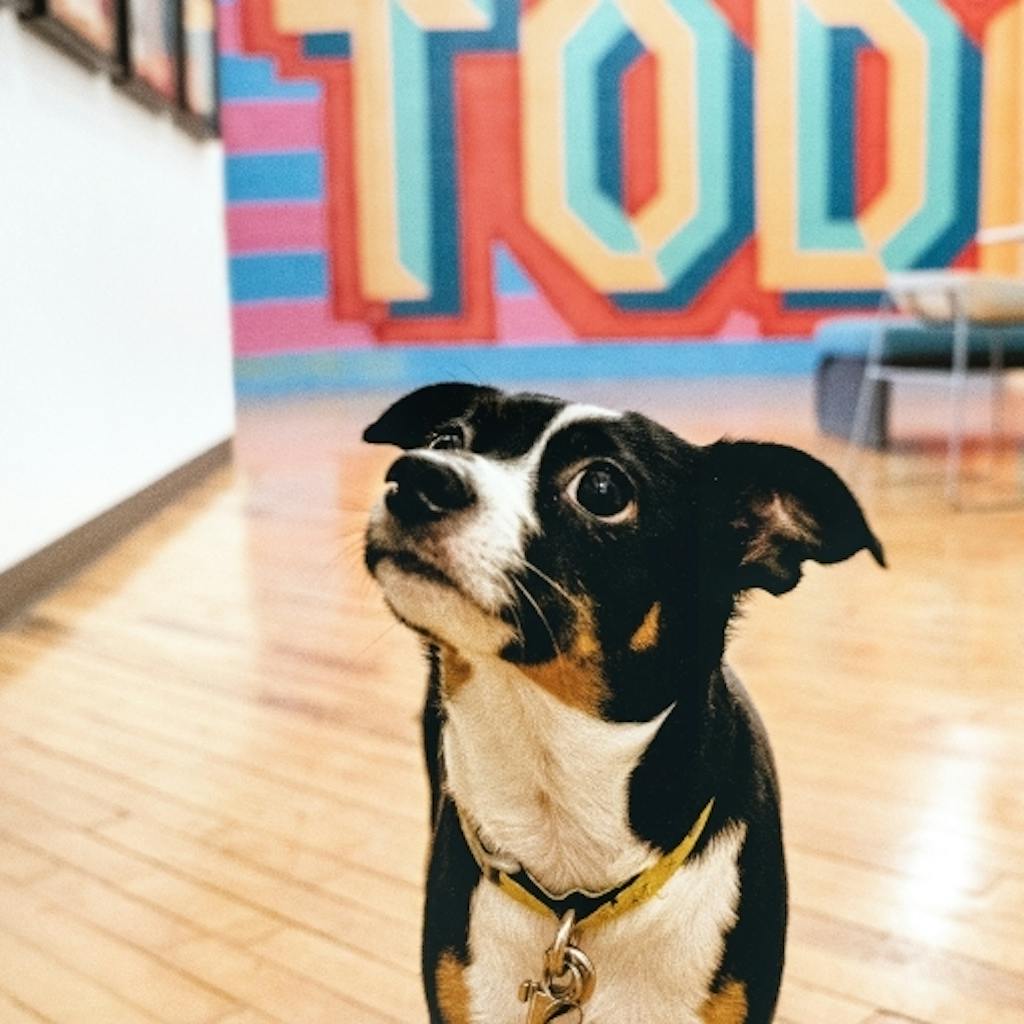
We're so lucky. When renowned international street artist Ben Flynn, a.k.a. EINE, was in town recently, he painted an amazing mural on two of our walls. We were introduced to him by agency friend Chank Diesel who assisted with the installation. EINE was so laid back and approachable, even though he's one of London's most famous, prolific and original street artists and his work sells for tens of thousands of dollars. In our Minneapolis office we have his artistic vision to inspire us, as well as a reminder that there's no better time than now to make things happen. EINE would totally agree.


What Is Your Super Bowl?

Mike Caguin and Eric Husband

The Super Bowl is the most anticipated and talked about event in the advertising industry. It’s our Oscars, Grammys and Fashion Week wrapped into one. We expect to see some of the best creative, soundest strategy and most effective marketing of the year. But with all the flash and hoopla, how does it affect the average marketer? What can the millions of marketers, business leaders and entrepreneurs take away on Feb 3rd?

First, they should ask, “What is my Super Bowl?” Instead of looking at the event as the advertising star-studded night it is, consider it just a platform, a launching pad that top tier advertisers decide (or can afford) to leverage.  Every marketer has a “Super Bowl” or big stage and you don't need $4 million plus (average cost of the Super Bowl media buy) to own it. While helping Caribou Coffee with a major rebranding effort, we approached the design of their coffee cups as their Super Bowl. After all, to the nation's second largest premium coffee shop, their cups actually garner the sort of impressions a commercial during the Super Bowl does. All of a sudden, the cup designs became a lead element in the campaign and everything followed.

And with Land O'Lakes, we treated their new mobile site as their Super Bowl. Today's busy Moms (and Dads) are turning more and more to mobile devices to plan and prepare meals, so we placed great emphasis on creating a user experience that was intuitive, simple and inspiring. After all, it will be used by millions of people.

Once you identify your Super Bowl, it might not reach hundreds of millions of viewers in one fell swoop—or feature the mishaps of Janet Jackson— but there are some things we can all learn from the big game that can be applied.

It's not just about showing up, it's about standing out.

Whether it's at a trade show such as CES, packaging on a store shelf, or something as simple as a sweepstakes—just think, what would happen if you treated it as if everyone was watching? Pretend for a second that USA Today is going to gauge your efforts with a meter the next day. That your family and friends are going to point out "I know the person who did that…" The reason so many Super Bowl spots are memorable isn't just because they cost a lot of money. It's because a lot of thought went into them. No one wants to disappoint.

Make sure it’s the right kind of memorable.

Too often, in their efforts to stand out, advertisers make the mistake of not linking their creative idea to the uniqueness of the product. They do a great job making people laugh, or maybe even coaxing a tear or goosebumps with a heartfelt message, but the viewer is unable to remember what brand moved them in the first place. Will your audience walk away your Super Bowl message the way you'd like?

Get the most out of your investment.

Two trends have emerged from advertising during the big game. First, creating buzz for your ad prior to game day is a great way to make your marketing dollars work harder. Can you tease your Super Bowl effort before it launches?

Second, advertisers are doing an increasingly good job of tying a social component to their spot, whether it’s an online game or asking viewers to vote for the ending of the spot on Twitter. By doing this they engage consumers, increase conversations and build buzz. Be sure you’ve employed all the tools in your marketing toolbox to promote your Super Bowl.


Social Sharing Buttons Are Overrated

Kyle Johnson

Seeing social media sharing buttons across the top of a site has become the norm. Facebook, Twitter, Pinterest and even Google+ have buttons on almost every page we see. Some tools, like addthis.com, even let you add over 300 social network buttons to your site. With all these choices, how do you determine which networks are the best for your site?

Through testing, we set out to identify just that, the best set of social sharing buttons to include on one of our client sites. What we found was surprising: Pinterest is both the hero and the villain of social sharing buttons.

What We Did

We tested two different combinations of sharing buttons. The Original Set included buttons for Facebook and Twitter. The Test Set added Pinterest and Google+ buttons, along with a “more” dropdown that included tumblr and StumbleUpon. Each set was presented about 50% of the time on a highly trafficked site. We tracked shares using both Google Analytics and network specific insights platforms, such as Facebook Insights.

What We Learned

The Pinterest button has volume, Facebook is close
In the Test Set, Pinterest and Facebook accounted for 63 times more button shares than all four of the other networks combined. In the Original Set, Facebook outperformed Twitter by a factor of 93. So, for this audience Google+, Twitter, StumbleUpon and tumblr sharing buttons are all non-factors. We can’t make blanket statements about the success of those network buttons, as this behavior is audience driven, but those networks regularly have a lower volume. Visitors are still sharing content on lesser networks, but it appears that they prefer other methods of sharing than buttons.

The Pinterest button bullies Facebook
The addition of the Pinterest button increased the total number of button shares almost 500%, but came at the cost of a 33% reduction in Facebook Likes and shares. In fact, adding the Pinterest button led to a 31% loss of shares on all other networks. It would seem that visitors are only willing to share using one button, and that Pinterest takes precedence. Is Pinterest worth the reduction of Facebook shares?

The Pinterest button also bullies Pinterest
When given the option to use a sharing button instead of an organic method, such as the Pin It! bookmarklet, visitors will use the button. This seems obvious, but there are some implications. There was a 30% reduction in  organic Pins once the Pinterest button was added. So, total button shares went up with the addition of a Pinterest button, but a majority of the increase was from people using the button instead of sharing organically; ultimately at the cost of Facebook interactions.

What’s the value of a Pin?
The value of a social share is as contested as the measurement as value of a social follower. Pinterest, being new and unique, is even harder to define. There’s a few subtle ways Pinterest and its users behave that provide some insight into the benefit of a Pin.

Pins quickly lose branding. While looking at your feed, no source is displayed for Pins or Repins. In fact, to see the source while shifting through a person’s pins you need to navigate to the particular user’s individual boards. Repins account for 80% of all Pins, one of our client’s popular photos last month was pinned 13 times from the site and repined over 11,000 times. The mobile experience behaves similarly.

So, without a user taking extra steps to find the source of a Pin, it remains fairly anonymous. If your photo content is not easily recognizable, Pinterest users will likely not know it’s related your brand. If your brand has easily recognizable content, such as cars or mascots, branding will remain. Except for a few iconic pieces, food, clothing and furniture are all products examples that often are Pinned without brand recognition.

If you run a photo-centric site, you’ve undoubtedly noticed spikes in Pinterest referrals. For sites we track, usually one or two Pins are responsible for the majority of the increase. On average, we’ve seen visitors from Pinterest spend 70% less time on site, have a bounce rate increase of 30%, and mostly view only the page they landed on from the Pin. In the data we analyzed, site visitors from Pinterest provide little value to high-level objectives.

Takeaways
Unless you’re targeting an audience that matches a lesser-used network’s demographics, leave the buttons off the site and let people share organically.

While some brands have used Pinterest accounts correctly, value for most brands lies in the organic pinning already happening without a Pinterest button.

We’re big believers in never-ending testing, so this is just the beginning. As we roll out other styles and combinations, we’ll let you know how these initial findings change.


Music + Creativity: Part One

Cassie D'Kae + Michael Schwandt

Stepping off the elevators at Colle+McVoy, employees and visitors are immediately greeted by sounds of Minnesota’s beloved, eclectic radio station, The Current, pumping through the speakers. Its presence isn’t just a welcomed distraction, it helps define and capture the energy of this agency. The Current doesn’t have a specific format — it’s not top 40, it’s not classic rock, it’s not lite jazz. It’s a station that tries to share the most creative and interesting music that programmers can find, whether it’s a gem from the past, or an obscure new artist on the cusp of stardom. Colle+McVoy has a similar desire — to foster a community of creativity and share the most innovative work we can with the rest of the world. Our music choice is definitely no accident.

It is apparent from one walk around the offices of C+M that our love for music definitely does not stop in the lobby. Desks are adorned with headphones and speakers of all shapes and sizes. Personal rock out sessions or cubicle dance parties can spontaneously erupt at any time. And there is always someone talking about a show they saw, will see, or wanted to see but couldn't attend. Music permeates our walls and ears 24/7. It truly is creative fuel that plays an enormous role in establishing a fun, inspirational and open atmosphere, rather than a stale, dry one.

So what is it about music that is so intrinsically tied to creative-driven industries, advertising in particular? According to Don Campbell, author of The Mozart Effect and a renowned authority on the transformative power of music, "Music can be used to stimulate, activate, and relax the mind and body.” All of which are key elements in a successful creative process, and hence, producing stand out work for clients. What’s more? Elena Mannes, author of The Power of Music, states, "scientists have found that music stimulates more parts of the brain than any other human function."

At Colle+McVoy —based in the heart of urban, arts-heavy Minneapolis— music offers employees respite in the middle of a stressful day, provides sonic caffeine for late nights and early morning deadlines, and gives us just the right amount of inspiration to successfully complete a project. For C+M, creativity is not a department, but an expectation of all employees. So although musical tastes are wide and varied at C+M, there’s no doubt that it positively impacts every individual, acting as a catalyst for us each to reach our full creative potential.

A fierce advocate of music in almost any environment, Campbell believes, “More and more businesses are recognizing the importance of music in the workplace." This is certainly true at C+M, and has been for some time. Since music surrounds is ingrained in our culture and pushes us to do great work, we have decided to go one step further by bringing bands and musicians to perform live at the agency. This initiative, dubbed C+M Sessions, will kick off its inaugural performance this evening, Thursday, Aug. 2, with local roadhouse rockers, The 4onthefloor. It’s time to take off your headphones, put on your dancing shoes, and swill a cold beer to some rock and roll in the summer sun.


Pedal Minnesota: Inspiring People To Explore The State By Bike

Pedal MN Case Study

Solution:

Research shows that if people were inspired and made more comfortable with biking, they would do it more often. So we created Pedal Minnesota, a campaign that celebrates all the things that make biking in Minnesota so great. The campaign itself is built around a new slogan that rightfully declares Minnesota, “The Bike Friendly State.” This simple, memorable statement conveys many of the reasons why Minnesota is a great place to ride: accessibility, culture and inclusiveness.

To inspire and mobilize bikers we needed to make biking – and information about it – more accessible. PedalMN.com does just that. A biker-friendly website that serves as the ultimate go-to resource on biking in the state, PedalMN.com features an interactive map, lists of bike-related events, safety tips, trip-planning ideas and much more in one friendly, easy-to-use site. Other elements of the integrated campaign included online video, SEM and high-impact outdoor, including bus shelters that were converted to bike tune-up stations. Just launched in the summer of 2012, the campaign has already garnered media attention and rallied the support of six state agencies and a major corporate sponsor.

Challenge:

Minnesota is a great place to ride a bike. We have more bike commuters per capita and thousands of miles of paved and off-road trails. We have the largest bike share program in America. The state regularly appears at the top of “Best Places to Bike” lists. And our distinctive, rich and active bike culture is second to none. Despite this vibrant bike lifestyle, there are still those who are intimidated by the idea of throwing a leg over a saddle and going for a ride. Our challenge was to create a consumer campaign that would inspire and mobilize new or infrequent bikers to get out and ride more often, and create a hub for all things biking in the state.

Indian Motorcycle: Re-establishing America’s Oldest Motorcycle

Indian Case Study

Solution:

Because the brand hadn’t been highly active in the motorcycle world for quite some time, we couldn’t just come out and claim that Indian Motorcycle was back. That’s how others had failed. We also knew we had to do a lot more than just push product. We had to reignite the passion for all that was, and lay the foundation for all that could be.

And so we began by creating the 2012 Bike Catalog, which was as much about the bikes themselves as it was about the renewed commitment to reestablishing the brand, and getting back to the original ideology of the company. To build momentum and get Indian dealers excited about the future, we also created in-store pieces to celebrate Indian Motorcycle’s 110th anniversary. Hangers, bike tags, apparel tags, radio spots, print ads, window clings and a special jacket stand were all made and sent to each dealer.

Most important, we laid the groundwork for all that will come from America’s first Motorcycle Company.

Challenge:

America’s first motorcycle company had been through some hard times ever since the original company went under in 1953. Since then, numerous attempts to keep the brand relevant had tried and failed. In April 2011, Polaris Industries Inc., America’s leading power sports company, purchased the legendary brand securing its future once and for all. Finally, Indian Motorcycle had what it needed most - the financial backing to become more than just a legend of old but a culturally relevant Motorcycle company building game-changing bikes made for the road ahead. Our task was to begin building confidence and relevance to set the stage for the future of Indian Motorcycle.

Fostering An Honest And Collaborative Relationship

Nat Jungerberg

Consider for a moment that you’re moving. It could be from an apartment to your first home, or even across the country. Regardless, you’ll need some help. Who do you call?

You’ll need someone with muscle and endurance. You’ll need someone who can navigate tight corners and think creatively when challenges arise.

You’ll probably want to call someone who respects you as a person, as well as your personal property. And perhaps most important, you’ll want to call someone who you can share a beer with once the work is done.

Relationships with clients, colleagues and coworkers are no different. With most of the world’s population spending one-third of their adult lives working, according to the World Health Organization, relationships at work have become a cornerstone of productivity, innovation and overall employee satisfaction.

In an agency, you can always tell how good the work is going to be by the relationships. This obviously applies to client relationships, but it also holds true for relationships within the agency or between partnering agencies.

The best relationships are honest and collaborative, built on a foundation of mutual trust, respect and shared goals; whether it’s raising the profile of a brand, increasing sales or moving a sofa across town.

How are your working relationships?


Five Ways To Be Remarkable

Casie Cook

At a time when many bright-eyed college graduates are embarking on their first internships or “real” jobs, it seems appropriate to offer some advice on how to be successful. First, you must understand that you cannot fail. Every new endeavor is an opportunity to learn and to grow. Sounds cliché, but it’s true. 

You know you’re smart. Now you have to prove it. Based on my experiences, you can do this by being an incessant learner, thinking critically, building strong relationships, understanding expectations and showing passion along the way.

Keep learning

Learning doesn’t end after college. In a very real way, it’s the start of you creating your own curriculum. Look for inspiration everywhere. Read articles and books, study people and places, attend events, talk to smart people – just get out there and soak it up. 

Think differently

If you’re asked to do something, don’t just do it. Recognize the end goal and over-deliver. Find a different, better solution. Combat ambiguity by asking good questions. Asking questions demonstrates curiosity and the desire to better understand what’s trying to be accomplished. You’re not expected to have all the answers. No one does. 

Build good relationships 

Whether you’re extroverted or prefer to keep to yourself, you must create connections with people inside and outside of where you work. Cultivating strong relationships will help you navigate through your career – and your life. The easiest way to do this is to just be you. People will recognize when you’re being genuine and get to know you for who you really are – professionally and personally.

Understand expectations

One of the biggest barriers to surpassing expectations is not knowing what they are in the first place. Ask! On your first day, ask how your success will be measured. Then follow up after about a month by requesting a review to understand what you’re doing well and what you can work on. 

Wear your passion

Finally, show that you’re passionate about what you’re doing. People don’t want just anybody representing their brand. They want a team of passionate, ambitious leaders who will advocate for the organization. Enthusiasm should shine in everything you do. 

In short, be so remarkable that you make everyone else aspire to your awesomeness. Work every day to make yourself, and everyone around you, better. You’ll know when you’ve found what you’re meant to do because you’ll feel like a better you with every bit of effort you contribute to it. You’ll also know if you haven’t found it. You must continuously expose yourself to new information and experiences to find what makes you happiest. Remember, you cannot fail – so long as you try. 

“Don’t ask what the world needs. Ask what makes you come alive and go do it. Because what the world needs is people who have come alive.” – H. Thurman 


Now Hiring: Copywriter

Position Summary

C+M is seeking a copywriter to help create, execute and present ideas for a range of clients across all mediums.

Click here for full description and application.

Colle+McVoy is an Equal Opportunity Employer.

Now Hiring: Associate

Position Summary

As an Exponent PR Associate you will be responsible for planning, coordinating, problem solving and directing effective public relations campaigns for agency clients.

Click here for full description and application.

Colle+McVoy is an Equal Opportunity Employer.

Now Hiring: Account Executive

Position Summary

The Account Executive is primarily responsible for the initiation and execution of all marketing, creative, media, and research projects for assigned accounts. He or she is the client’s day-to-day contact and brand steward within the agency.

Click here for full description and application.

Colle+McVoy is an Equal Opportunity Employer.

Now Hiring: Assistant Account Executive

Position Summary

The role of the Assistant Account Executive is to support agency team members. He or she must coordinate and manage the activities on assigned accounts in such a manner that work is done to high standards, maximum efficiency and accuracy, on time, and within the specified budget parameters.

Click here for full description and application.

Colle+McVoy is an Equal Opportunity Employer.

Now Hiring: Senior Digital Strategist

Position Summary

Working alongside brand planners and analysts, the Senior Digital Strategist translates brand strategy and data analysis into a clear point of view that outlines how our clients can best leverage interactive marketing. This person must be a pattern seeker as well as a dot connector. He or she will look for patterns through analytics, technology trends, audience insights and brand strategies. And she or he will connect the dots by architecting digital strategies influenced by our client’s business and marketing objectives. Once a strategy has been determined, the role of the Senior Digital Strategist becomes one of helping it translate into idea generation. All while partnering with the account, creative and technology teams to ensure the strategy is effectively implemented. This position reports directly to the Director of Interactive Innovation.


Click here for full description and application.

Colle+McVoy is an Equal Opportunity Employer.

Now Hiring: Interactive Associate Creative Director

Position Summary

Colle+McVoy is looking for an experienced Interactive Associate Creative Director to help guide agency projects across the breadth of digital media: website, mobile and emerging media, social media, and digital campaigns. The ideal candidate will have extensive digital experience with a focus on conceiving, directing and executing groundbreaking interactive work.

Click here for full description and application.

Colle+McVoy is an Equal Opportunity Employer.

Now Hiring: Analyst

Position Summary

Working alongside digital strategists and brand planners, the Analyst will serve as the primary support for other Analysts within Colle+McVoy’s Analytics department. As the main data collector within the group, this person must think numbers make the marketing world go round. And that Avinash Kaushik rules the universe. The Analyst must also be ambidextrous among many different web analytics and social media monitoring tools. Whoever this lucky person is reports directly to the Analytics Director and will work across a wide-variety of industries and brands.

Click here for full description and application.

Colle+McVoy is an Equal Opportunity Employer.

People Google It...

...Even When They Know Your Website Address

According to a recent comScore ranking of search engine activity in the U.S., more than 20 billion total searches were conducted across major search engines in December 2011. That’s a lot. 3% more than were conducted the previous month.

But the figure shouldn’t be too surprising given the role search plays in our lives. Another recent set of data from comScore, shared in its annual U.S. Digital Future in Focus report, found that the U.S. market for search grew at an 11% clip last year. Not only did 2011 see a slight 3% uptick in unique searchers, but existing users of search ran 7% more searches. It’s clear that we rely on search to discover. And our reliance on it is clearly increasing.

Our analytics team fielded a question from one of our clients about how people use search engines to make their discoveries and interact with the Web. Specifically, our challenge was to use Google Analytics to demonstrate whether people still rely on search engines even when they had already discovered the content they were seeking.

The Challenge

Do people continue to use search engines even when they already know the URL?

The Methodology

  • Assume visitors returning to a website already know the URL.
  • Acknowledge that this means return visitors would arrive through direct sources rather than through search.
  • Compare a full year’s worth of return traffic sources to those of new visitors among site profiles within Colle+McVoy’s Google Analytics account.

What This Means

Returning visitors are much more likely to find your brand through search, even when they already know your website address. The data above indicates that visitors continue to rely on search engines even after they have some level of awareness regarding their intended online destination. Marketers therefore need to ensure that their online presence is relevant enough to appear in search engine results not only for first-time visitors—but also for those who have already been to the site.


Nestlé Purina: “Talking Dogs” TV

Nestle Purina PVD Fortiflora TV


Solution:

The star in our cast is Mishka, the talking Husky and YouTube sensation who is known for saying “I love you.” The ad is a fun and memorable way for owners to learn about how they can help their pets get back to being themselves with FortiFlora Nutritional Supplement. In addition to TV impressions, the ad is receiving hundreds of thousands of views on YouTube.


Challenge:

Pets bring so much happiness to their owners, and yet GI upset can get in the way of happiness for both pets and their owners. A recent study by Purina reveals that almost one in every four pets had some kind of GI incident over the past year, and that nearly all of their owners wanted to have something on hand to help manage GI upsets when they occur. We needed to demonstrate to pet owners that with FortiFlora Nutritional Supplement from Purina, they can be ready for GI upsets and return that happiness to their pet.

The Month of Movember

C+M Movember blog

Will Pierce

My interest in using facial hair for fundraising started last year with an email from Micah Dahl, one of our editors. He was asking for donations to something called Movember, a movement to raise awareness and funds for men’s health, specifically prostate cancer and other cancers that affect men. I went to the Movember site just long enough to verify that it was a real charity, donated to Micah's mo space and forgot about it.

Then this October I received an email from Movember asking me to join. This time I went to the site and took more time to browse around. The men's health page hit me pretty hard. These are just a few of the facts, and they are scary:

  • One in two men will be diagnosed with cancer in their lifetime and one in three women will be.
  • Evidence suggests that about a third of the 571,950 cancer deaths expected to occur will be related to obesity, physical inactivity and poor nutrition, and thus could be prevented.
  • Smoking accounts for at least 30% of all cancer deaths and 87% of lung cancer deaths.
  • An estimated 13 million adult men over the age of 20 in the U.S. have diabetes, and one third of them do not know it.
  • One in eight men who suffer from mental illness actually seek help.
  • 24% of men are less likely to go to the doctor compared to women.

Then I started thinking about a dear friend of mine who passed away in 2004 from his second bout with brain cancer, and about my father-in-law, who passed away in 2008 due to complications from prostate cancer. Then about my dad, who is surviving bladder cancer. Then about my brother-in-law currently battling a stroke and a staff infection. Then about myself having not gone to the doctor in more than nine years. The number of men in my life who have health issues is scary.

So, I finally did something about it. I made an appointment with my doctor for an annual checkup, started growing my mustache, asked all the men in my department to join the C+M Movember team, then reached out to everyone at C+M and started bugging them about visiting the doctor and raising money. We had 16 participants on the C+M Movember team and have raised over $1,330.


Here are some inspiring thoughts from fellow C+M Movember team members:

It all started for me with a joke mustache for a costume, actually it wasn’t even really a mustache, it was more of 14-year-old boy attempt at a mustache. I had already committed to the mustache when I saw something online for “Movember” and wondered what it was. Once I looked into it, I wanted to join. It was a chance to keep a gloriously horrible mustache and use it for something helpful. How could I not, this was awesome! So, I created an account, put the shaver away and sent out some emails with the goal of raising $100. To my surprise, I ended raising over $700 that year and learned through emails how much prostate cancer, and cancer in general, had affected other people’s lives. My grandfather got cancer, but after frequent checks, he had surgery and has remained free from it since. So, I did it again for the next year and doubled my efforts. It’s an easy thing to do, it’s fun and it is great to feel like I’m helping people and raising awareness for something that has affected so many. Here’s to mustaches, which aren’t so bad, in fact can be great, and here’s to raising money for a great cause! Donate today, just do it, seriously, you’ll feel great, then get into the doctor and get a yearly checkup!
-Micah Dahl

I participate in Movember to help bring awareness to men's health issues. I believe the root of these issues is an inherent male stubbornness and a fear of appearing vulnerable. Enter the mustache. While some women can grow them, the best mustaches are found on men. Mustaches are very masculine, but they can also be downright silly. I find that broaching difficult topics can sometimes be eased with a little humor. So, I wear a mustache to remind myself and my fellow man that, like a mustache, being healthy is a conscious effort that requires hard work along with times of feeling vulnerable.
-Nat Jungerberg

My mustache is being used as a bartering tool – yearly check-ins with the doctor for my dad in exchange for my clean-shaven face.
-John Frahm
 
I’m all for bringing back the ’80s each November if it helps to promote men’s health via our cookie dusters. And for those of you who’ve asked, I did find my leisure suit, but I ironed it, so now it’s fused to the ironing board and I won’t be able to wear to the office (darn).
-TJ Mobeagan


Caribou Coffee: Holiday 2011

Caribou Coffee Holiday 2011

This holiday season, Caribou Coffee is Making it Merry with the return of their much-loved Reindeer Blend and other holiday favorites, as well as a new Fair Isle look that adorns everything from cups to window clings—and transforms stores into a cozy holiday retreat. In-store posters, cup wreaths and Fair Isle stockings further complement the festive feel, while a new Sweater Maker Facebook App allows consumers to dress their Facebook photos in holiday sweaters and share them through various social networks, successfully spreading the holiday cheer. For every sweater that’s created on Caribou Coffee’s Sweater Maker Facebook App, a real one will be donated to someone in need. Now that’s Making it Merry.

Google+: Searching the Social Network

Craig Pladson

Colle+McVoy’s FEED IT educational series was created more than three years ago with the purpose of spreading inspiration and sharing knowledge throughout the agency and with our clients. We’ve had a wide range of amazing speakers, including Scott Belsky, Robert Stephens and Alex Bogusky. Independent film director Hunter Weeks will be coming to the agency to kick off our 2012 FEED IT series in January. As an extension of FEED IT, we launched our inaugural digital excellence session last week. These sessions take an active approach to learning through demonstration with a focus on emerging media and technology. After each of these sessions, we will post our presentations to the C+M blog, so you’re able to follow along, comment and ask questions.

This month's topic was Google+. We started by framing up Google+ within the context of Google’s greater mission: to organize the world’s information and make it universally accessible and useful. This, of course, placed an emphasis on search as we talked about the purpose and long-term validity of the network. The point is that Google+ is more than a social network. It’s an opportunity for Google to integrate their ecosystem of products and services (e.g., Gmail, music, photos) through a consumer-friendly social platform with targeted sharing functionality. Google+ also primes the pump for +1’s, which have a positive impact on search relevancy as people can easily find endorsed links from people within their Circles. The deck also informs the audience of the network's usage activity, demonstrates its main features and outlines implications for marketers. Click through the deck and let me and Dan Mandle know what you think.


Now Hiring: Art Director

Position Summary

As a junior to mid-level art director at Colle+McVoy, you’ll be responsible for wowing our creative directors with your ideas, design skills and entertaining YouTube video finds. You’ll spend a lot of time with a copywriter dreaming up ridiculously big ideas. Once you and your writer friend strike gold, you’ll be responsible for bringing your big idea to life. Sometimes you’ll work with outside vendors such as photographers, retouchers, illustrators, directors, animators, editors and print vendors. You may even work with an animal trainer or a chainsaw juggler at some point, if you’re lucky. So, if you’d like to work for an agency that has a sweet rooftop deck overlooking downtown, a beer trike and was named one of the Best Places to Work by Advertising Age and Outside magazine, then show us what you’ve got.

Click here for full description and application.

Colle+McVoy is an Equal Opportunity Employer.

It’s A Blog World, After All

Allison Janney

Bloggers can get a bad rap. “Who even reads blogs?” is often a question posed by teams or clients when discussing a potential blog outreach program. Actually, a lot of people read blogs. According to eMarketer, the number of blog readers in the U.S. will reach 122.6 million in 2011, representing 53.5% of Internet users.

I’ll be the first to admit that not all blogs are good blogs. It’s like finding websites – there’s the good, the bad and the ugly. However, when you want a third-party endorsement for your brand online, bloggers hit the sweet spot.

Here are some points of differentiation that make bloggers a powerful influencer group, and some ideas for how you can best work with them on behalf of your brand. 


Passion


I love working with bloggers because they are passionate about their subjects. In most cases, bloggers are not making a living off their blogs. Unlike reporters, who are given topics by editors, bloggers can write whatever they want and provide a POV. The end result is content that reflects their personality, with priceless personal anecdotes about your brand. 


Tip for marketers: Pay it forward.

Always think about how you can help a blogger create relevant content and further establish credibility within his or her community. Ultimately, they’ll work with companies that help increase their readership but allow them to remain authentic to their beliefs and interests.

Personalization


Bloggers reveal a lot of personal information. In fact, they need to share personal information to build their brand and provide a way for readers to connect. A blogger’s personal life directly effects what they are writing about on their blogs. Life events such as getting married, having a baby or traveling will have a direct effect on their blog’s content and frequency.

Tip for marketers: Do your research. 


You can find out a lot about bloggers through their posts, about sections, and social channels. Read as much as you can, and personalize each message to account for recent developments in their lives. You don’t want to appear insensitive or ignorant for not knowing something they’ve already made public.

Creativity


Bloggers are able to experiment and push the boundaries because they aren’t answering to a larger team. They don’t need to get permission to write about controversial or unpopular topics. Also, because they are topic experts, bloggers help identify and create “What’s Next” before anyone else.

Tip for marketers: Be flexible


Constantly solicit feedback from bloggers and allow them to help customize a program. Don’t be afraid to provide suggestions, but always allow bloggers to infuse their own creativity and ideas.

Obviously, I’m a fan of working with bloggers. Bloggers are able to organically create a highly engaged community of readers, fans and followers. Their influence is invaluable as a third-party endorsement to help fuel conversations and reach your target audience. In the future, bloggers will continue to thrive. What do you think makes great blogs stand out in all the online noise?

Celebrating the Unpredictability of the Digital Decade

Craig Pladson

Minnesotan marketers get interactive. This has never been more apparent than it was this past Wednesday at the Minnesota Interactive Marketing Association (MIMA) Summit. The theme of the conference was “Celebrating the Digital Decade,” which served not only as a testament to the monumental changes we’ve experienced in digital, but also a celebration of MIMA being the oldest and biggest interactive marketing association in the country. MIMA has pioneered a local path that allows organizations to elevate their talent by offering premium programs that present high-quality speakers to share the digital love.

There were more than 60 speakers at this year’s MIMA Summit, who were organized into 10 different tracks for attendees to choose from: content and storytelling, digital decade, e-commerce and e-mail, marketing technologies, measurement, mobile and screens, the nonprofit perspective, social media, trends and user experience. Colle+McVoy sent a group of people from various disciplines in order to take in as much as we could from the 40 different sessions.

Outside the two keynote speakers (Avinash Kaushik + Chris Anderson), I spent most of the day attending sessions listed in the user experience track. With the hope of capturing the perspective of everyone who attended from Colle+McVoy, I solicited feedback by asking for two or three sentence descriptions of themes they identified throughout the day. The unpredictable nature of the Web and technology rose to the top. Avinash’s opening keynote talk set the tone, “Predicting what the Web will be in five years is impossible. What we learned six months ago is irrelevant today. Which is why we all continue to do this and why all of you are here. That’s what I love about my job.” Avinash closed by talking about how failure inherently follows the unpredictability of innovation. By failing fast, interactive marketers can swiftly adapt to the real-time changes in consumer behavior.

The idea of unpredictability carried over into the first session I attended, titled “The Future of UX” by Boon Sheridan. “You can’t put things in motion and predict the future of digital and technology because it changes so fast. Focus on the now. The reality is that we can’t solve for design problems that don’t exist today,” emphasized Sheridan. He continued, “Design for interruption. It’s impossible to perfectly guide someone through the digital ecosystem.” The idea of digital ecosystems has become a common phrase among UX professionals and digital strategists. Given the ecosystem’s unpredictability, Sheridan recommended starting all digital projects by storyboarding a few different use-case scenarios and then layering in the navigational and content gaps that exist. From there, teams can brainstorm possible solutions before initiating design concepts.

Edward Boches and David Armano also covered the unpredictability of innovation in their session “Group Therapy for Would-Be Innovators.” Boches argued there are three ways agencies can grow: 1) sell existing services, 2) develop new services for existing clients, 3) create new services for new clients. Innovation can fuel any of these growth strategies when the agency’s workforce is liberated to work on experiential projects. Due to the unpredictable nature of the Web and technology, the only way to keep up with the shifts in consumer behavior is to experiment. Learn by doing. And failing. Hearing these perspectives definitely solidified my perspective on how Colle+McVoy has started to formally harness innovation across the agency. My role may serve as a catalyst to identify opportunities for innovation, but it’s the makeup of the agency that allows us to produce ideas such as Squawq, Super Chatter and SXSW Talks.

My final session of the day, “Rethinking User Research and Usability Testing for the Social Web,” offered one final reminder of the unpredictability of the Web and consumer behavior. “We don’t know how to find out about things we don’t know about. People don’t act in the real world as we want them to in usability tests. People don’t live in a world doing one task with one device out of context,” explained Dana Chisnell. She said, “The Web has always been social, but it’s now more social than ever. The Web enables a powerful platform for human-to-human interaction facilitated by technology.” Because of this, Chisnell expressed the importance of rethinking how we gather people’s feedback as we create digital experiences. With the Web being an enabler of human-to-human interaction, understanding people’s online relationships is more important than ever. We need to stop looking for the things we know about in usability testing and challenge ourselves to find the things we don’t know about.

MIMA was right. The imperfection and unpredictability of the past, present and future of interactive marketing should be celebrated. It should be celebrated because our community has demonstrated an unmatched passion and interest in learning, failing and obsessing over how we can get smarter and better at what we do. There’s a reason people like Avinash Kaushik and Chris Anderson are coming to Minnesota. It’s because we’re humble enough to be obviously curious and we have some of the top brands and agencies in the country producing some of the best interactive work on the planet.


Edward Tufte: Assign Homework Before Your Next Meeting

Dan Mandle

Because I work with data and visual displays, I was thrilled when asked to join a team enroute to New York City last week to hear from Edward Tufte, the man The New York Times calls "The Leonardo da Vinci of data." I attended his one-day "Presenting Data and Information" course.

I figured Tufte’s presentation style would be unique enough to warrant the meme I stumbled across a few years ago about him having a strong dislike for PowerPoint. Turned out the meme was well-founded — excepting the part about the kittens.

What I didn’t expect, though, were the similarities between how Tufte prepared us for his presentation and the recommendations provided in Al Pittampalli’s Read This Before Our Next Meeting.

Tufte and Pittampalli agree about empowering people to be efficient when working in a team environment. Better put, they both believe in empowering individuals to bring efficiency into their teams. Tufte estimates that by sharing content with team members in advance of meetings, the length of those sessions could be reduced by some 20% to 30%. For Pittampalli, the approach turns sessions into more useful discussion time rather than mere presentation time.

In addition to covering the expected topics of data and information, Tufte also demonstrated how providing content in advance makes for a more thorough and engaging session. When the Colle+McVoy team checked in at the Manhattan Center, we received an 11x17 duplex-printed sheet containing our pre-session homework. In the hour we had before Tufte was to take the podium, we were required to read the following lengthy excerpts from his books:

•    The Visual Display of Quantitative Information, chapter 1 and chapter 9.
•    Envisioning Information, chapter 2.
•    Visual Explanations, chapter 1.
•    Beautiful Evidence, introduction and pages 12 - 45.

It didn’t matter who we were or where we came from. Tufte wanted his audience to attend his study hall so they would be better prepared for his session. I can’t speak for the hundreds in the room with us, but I thought the reading was time consuming. However, once Tufte began his session, we were all better prepared to actively listen rather than feverishly jot down notes.

My Edward Tufte experience has encouraged me to consider sending out relevant materials to my colleagues the next time I schedule a meeting with them — regardless of whether or not the subject material will cover data and visual displays. What's more, the “Presenting Data and Information” course has given me some ideas about what form those materials might take to best convey the story hidden away in them. All in all, it should make for more invigorating meetings. Tufte left us with plenty of inspiration to make it happen.

The Great Minnesota Get-Together

The Great Minnesota Get-Together

Megan Weisenberger

As a native North Dakotan, I wasn’t sure what to expect when I was instructed to go “make cultural observations” at this year’s Minnesota State Fair, the behemoth state get-together that attracts 1.8 million people – a cool 34 percent of the entire state’s population – every year.

At its roots, the Minnesota State Fair is a shared experience for a diverse range of people. An event that rolls around every year like clockwork. Individuals enter the gates and become part of a sweaty mass of humanity, united under the shared goal of celebrating the last golden days of summer, determined to sweeten the transition into cooler months by consuming buckets of Sweet Martha’s cookies.

Most articles written about the fair tend to focus on the food (chocolate-covered jalapeños, new this year!), and god knows I love mini doughnuts for breakfast. But as an account planner at C+M, I’m far more interested in the people who go to the fair and what makes them tick.

Within the masses, I noticed that there are two very distinct groups of people: those who merely go to the fair and those who spend every waking moment outside this two-week period fantasizing about the fair.

Those who merely go to the fair seem to approach the event as something they feel they’re supposed to attend, a duty of being a citizen of this fine state. They may go because it’s a tradition in their family, albeit one with some of the novelty and shine worn off over the years. They may go because they’re bored one night, or they may go because their friends and family are diehards trying to get them equally enthused about the fair.

No matter what their reason for attendance is, these people stand out. They’re the ones looking hot and miserable after an hour or two, the ones flatly refusing to play along with the clowns and the ones taking up every square inch of bench real estate. They’re the ones who are perfectly content consuming a simple hot dog and a bottle of water in the shade as the rest of the fairgoers bustle past them. They’re not fair curmudgeons, by any means, and usually go with the best of intentions.

But at the end of the day, the fair doesn’t do a lot for them. They get more out of watching a loved one joyfully consume a Pronto Pup than they do out of actually eating one themselves.

The people who go all out, however, are incredibly fun to watch. These are the ones who eagerly await the fair for 11 months. The ones who rush in with their unbridled energy and their Minnesota State Fair iPhone app, eager to soak up the sounds, tastes and smells of this glorious event through every orifice.

These are the older women in bejeweled t-shirts and glittery visors, the couples sharing romantic moments in matching duck crowns, and the parents of sparkly haired little girls wielding plastic swords. Love for the fair is evident in those who have worked the entire year to create the masterpieces found in the craft barn, in those on the admirable quest to grow the state’s largest pumpkin, and in those who merely delight in the culinary art of continuously finding new things to fry and put on a stick.

This story completely delighted me: In 2008, a group of Minnesota ex-pats got together and created Minnesota State Fair Day in New York City, an oasis for Midwesterners homesick for the taste of cheese curds and corn on the cob. For its first year, nine plucky souls ventured into New York City, looking for anything-on-a-stick they could find. This year, the event sold out, with hundreds of ex-Minnesotans wearing Twins gear, gathering together to eat chocolate-covered bacon and reminisce about the real deal. The event featured a contest for best butter sculpture and a food-on-a-stick competition, judged by Al Franken. In the Senator’s words, “It was heartening to see so many Minnesotans in New York who still love to celebrate the traditions of our home state.”

My takeaway from all of this is that whether you love it or hate it, the fair is important — a triumphant celebration of all that is inherently Midwestern. This 157-year-old event is still growing, is important to young people and is so ingrained in Minnesota’s culture that even the people who don’t want to come … still come.


Standing Out and Creating Serendipity at SXSW

Craig Pladson

Pete Cashmore and Dennis Crowley’s presentation, Enabling New Experiences & Creating Serendipity Through Check-ins, was the most tweeted about presentation at the 2011 SXSW Interactive Festival. According to SXSWTalks.com, there were over 5,500 tweets during their presentation, which generated more than 10 million impressions throughout the Twittersphere within 24 hours. Across all social media, the reaction to their presentation was 93 percent favorable, with 38 percent of these posts being positive.

The purpose of our proposed SXSW presentation, SXSW Presentations: The Good, The Bad, The Trending, is to get to the bottom of what makes a stand out presentation at SXSW. Pete and Dennis’ presentation fits the bill, which is why it’s highlighted here. Not only did it generate a significant number of tweets, but it also spread at an impressive clip with 46 percent of these tweets being retweeted. It’s amazing to think that 140 characters can spread to 10 million people over the course of 24 hours.

In addition to the quantitative analysis conducted at SXSWTalks.com, we assessed the presentation qualitatively by listening to the presentation and watching clips of it on You Tube. Based on our analysis, we’ve arrived at the following hypotheses:

Involve the Audience and Give Hugs

The Crowley family won Family Feud in 2009. Creating a perfect excuse for Pete Cashmore to poll attendees with random questions about Dennis and then emcee a quasi-Family Feud event. As Pete proposed questions, he encouraged audience participation. He also facilitated an open mic Q+A at the end of the presentation. Dennis even gave a woman a hug. Moral of the story? Get the audience involved and give hugs.

Unveil Exclusive Information

When Dennis first arrived onstage, Pete crowned him mayor of SXSW. Minutes later, Pete asked Dennis about the just-released version of Foursquare. Seconds after that, they were discussing venue harmonization, Foursquare’s most recent product enhancement. To wrap up their discussion, Dennis insisted on making an announcement about an exclusive Foursquare party. Give the audience a feeling of exclusivity and you’ll have them eating out of the palm of your hand.

Dual Format Popularity is an Anomaly

There are six different presentation formats at SXSWi. Surprisingly, this was the only dual format presentation in the top 10 most tweeted about presentations at SXSWi. Four of the top 10 most tweeted about talks were panel presentations with four or more speakers. Less isn’t more in this case.
If there were a proverbial social media iceberg, this would only be the tip of it. Mike and I hope to earn your vote to make a trip to the 2012 SXSW Interactive Festival to present our full analysis. And, if we do make it, be sure to check-in to our presentation on Gowalla, because that’s what the cool kids do. One hundred and fifty five people checked in to Pete and Dennis’ presentation on Gowalla, compared to 31 people who checked in on Foursquare. Wait, what? That’s right. Austin-based Gowalla out-checked-in Foursquare. #winning

Full audio of Pete and Dennis' presentation:


Old Navy: Inventing A New Brand Design System

Old Navy case study

The visibility of our work for Caribou Coffee earned us an invitation from Old Navy to submit a proposal to transform and define their entire brand design philosophy. After being selected from among some of the best design firms in the country, we developed a proprietary typeface, secondary fonts, color palettes, patterns, brand language, a comprehensive brand standards manual, examples of in-store applications and direct mail.

Cost Cutters: Owning Real Compliments On National TV

Cost Cutters Real TV

Solution

First, we uncovered a dilemma that was plaguing Cost Cutters. While consumers want to save wherever they can, the idea of incredibly affordable salon services didn’t always instill a lot of confidence. Enter the Cost Cutter Compliment Cam™. Based on a simple human truth that a good haircut begets good compliments, we set out to capture those authentic moments as they happened in real life. Customers who’d recently received a new cut and style were outfitted with hidden cameras and sent out to capture actual, unvarnished reactions of family, friends and coworkers. The takeway? You can, indeed, look and feel good without spending a bundle. And we had the enthusiastic compliments (and TV spots) to prove it. What started out as a TV campaign extended into rich online content and entertaining radio. Never underestimate a compliment again.

Challenge

Cost Cutters, a value-based hair salon owned by Regis Corporation, has more than 700 locations across the United States and Canada. The company asked Colle+McVoy to create a national TV campaign aimed at getting recession-weary consumers back into salon chairs.

Welcome to the New ColleMcVoy.com

Craig Pladson

We’ve been working hard to bring you an experience that tells you who we are, why you should work with us and - ultimately - inspires you to make a difference and join us in our vision to stand out.

We pushed ourselves to treat this project as we would any other client assignment. The clients in this case were the leadership team, and I had the pleasure of leading our internal team all the way from strategy to execution. This approach encouraged accountability and challenged us to practice what we preach. We learned a ton along the way, and we’re proud of the work we produced.

The Opportunity

As we assessed our previous .com and social media presence, we realized there was opportunity for improvement. Our previous interactive experience didn't accurately demonstrate who we are and what we're great at. It also didn't allow for the flexibility required by the dynamic nature of social media and agileness of mobile. If we could improve in these specific areas, we knew creating a stand out interactive experience was achievable.

Insight + Strategic Direction

Our findings from the qualitative and quantitative research we conducted uncovered what makes C+M more than an advertising agency. We invent analytics tools from scratch. We write job descriptions for clients. We offer strategic counsel on business-level strategies. We offer fulfillment capabilities in house. We build 3-D dioramas. The engine that makes all of this possible is the people who work here. And here is a special place. Employees and clients described the feeling they get when they walk off the elevator at C+M, and that feeling is what we wanted our online experience to emulate. We worked off the key insight that C+M is more than just a workplace; it’s the incubator for and manifestation of the vibrant, warm and open spirit of its people.

Audience + Architecture

With this insight in mind, we initiated a complete run-through of potential conceptual architecture solutions before creating visual design concepts. We explored organizational schemes based on four distinct audience profiles that we brought to life through personas and use case scenarios. We mapped out an agile experience that made itself smarter over time. An experience based heavily on search and a sophisticated tagging system, allowing site visitors to surface content they find relevant and useful.

Design

Our user experience strategies led to design concepting. We generated multiple concepts and put them up on the wall for review. One prevailed. The one you’re experiencing now. As we brought people through a prototyped version of the Web site, they reacted positively to the design and photography style. We hope your reaction is the same, but we also want to make sure the experience delivers on getting you to the information you’re seeking easily and efficiently.

Usability

During our usability sessions, we also observed people hesitantly browsing through our progressively created navigation system. A system built on the search-based tagging previously described. We offer five ways for people to navigate: 1) entering a search query, 2) clicking on a trending topic, 3) vertically scrolling through image tiles, 4) horizontally browsing via contextual links and 5) using the keyboard. Usability findings led to design and functionality tweaks that resulted in an experience surpassing the standards our team set. Time to go live.

An Experience Built From Behavior

Going live is only the initiation of what the experience will eventually come to be. The Web site as it exists today serves as the foundational platform we will constantly monitor and change to adapt to visitor behavior. Meaning, the next time you come back, your experience will be better. Furthermore, we continue to add content to the site (e.g., case studies, blog posts). Another reason to come back. In the meantime, I encourage you to leave a comment below or offer feedback through the survey we’ve created.


People For Bikes: Creating The Largest Bicycle Movement In The U.S.

Bikes Belong Branding

Solution

To achieve this goal, we created People for Bikes, a national movement to improve the future of biking. We started by developing a brand icon and design system that is joyous yet authoritative, nationalistic, personal and credible. The primary focus of our Web experience is to get cyclists, both casual and enthusiast, to raise their hands in support of a better future for bikes. The same look and feel that inspired our icon came to life on peopleforbikes.org. In addition to learning about bike-friendly initiatives taking place across the country, visitors are encouraged to sign our pledge and get others to do the same. Names collected will be used to lobby representatives in Washington, D.C., to create better and safer bike paths, lanes and trails. More than 225,000 riders have signed the People for Bikes pledge, making Bikes Belong the largest bicycle advocacy group in the United States.

Our work for People For Bikes was selected in AIGA's "365 | Design Effectiveness" exhibition at the AIGA National Design Center in NYC and featured in the September 17th, 2011 weekend edition of The Wall Street Journal. See the article>>

Challenge

Bikes Belong is a nonprofit organization with one mission: Put more people on bikes, more often. Our charge was to help Bikes Belong create a safer, more bike-friendly world. In order to appeal to all different types of riders, we needed to create a brand with universal appeal. A brand that spoke to the hard core bike messenger crowd as well as the suburban family that enjoy bike rides for recreation and a little family bonding.

FEED IT

Pushing through the confines of marketing and advertising platforms requires inspiration.

FEED IT inspirational series is Colle+McVoy’s collective blueprint drawn with the wisdom and experience of inspiring guests, speakers and leaders of the industry, and of course, our insatiable appetite for success.

About Summer Hours on the Solstice

Dan Mandle

Whether we see them as an early start to the weekend or as a jumping-off point for well-earned, longer-term vacation, we love our summer hours at Colle+McVoy!

This year, the program is back again by popular demand, even being mentioned by the Star Tribune in their selection of Colle+McVoy as one of the Top 100 Workplaces in Minnesota.

With summer in mind during last week’s rooftop carnival-cum-quarterly-meeting, our CFO urged us to take advantage of the extra time to get out of the office and explore a little bit more of the state we all call home. Disclosure: As a member of the Explore Minnesota team, I will unabashedly take any and all opportunities to proselytize about how diverse (and great!) the options are for vacations right here in Minnesota! I absolutely LOVE that there are more of us at the office who feel the same way!

I also love working for a creative advertising agency whose leadership implores us to get out of the office and use our vacation time. Only 38 percent of Americans actually take all their vacation days, according to this article in CNNMoney. That figure could surely be increased with a leadership group as supportive as ours.

In any event, my coworkers will all be asking themselves similar questions as Friday afternoons approach:
Are our loose ends tied up for the week?
Have we called our clients and wished them well for the weekend?
Did we do our timesheets?
If so, we’re free to depart for distant shores. The caveat again being that I really, truly hope those shores are located in-state. An early start to backyard tasks and household chores is also fair game.

So what do Colle+McVoyers actually plan to do with their summer hours? We took an internal poll recently to find some answers. Our own Sean Cooley helped make sense of the numbers.

Here’s to the #solstice. Happy summer!


SUGOi: Client Profile

SUGOi is committed to going beyond in order to create the finest performance apparel in the world for cyclists, triathletes and runners who demand as much from what they wear as they do from themselves.

Mongoose: Client Profile

Founded in 1974 in a So Cal garage, Mongoose has always been an innovator. Mongoose is built for riders by riders. That focus is what drives the innovation of new technologies and approaches to bike design. Mongoose bikes don’t just push the limits. They set new ones.

Nestlé Purina: Client Profile

For more than 70 years, Nestlé Purina has been passionately committed to improving the lives of dogs and cats through fresh, innovative approaches that redefine world-class pet care.

See our work for Nestlé Purina »

Colle+McVoy’s Guide To Northern Spark

Jen Stack

The Twin Cities is getting its own Nuit Blanche and we couldn’t be happier. We fully embrace and support our amazing local arts community, but we think it deserves a lot more attention. That’s what the international Nuit Blanche movement is going to bring.

Nuit Blanche (literally White Night, All-Nighter or Sleepless Night in French) is an annual all-night or nighttime arts festival that opens museums, private and public art galleries, and other cultural institutions for free and provides space for art installations, performances (music, film, dance, performance art), themed social gatherings and other activities.

This Saturday, June 4, the Twin Cities is joining the movement by hosting Northern Spark , the area’s first ever, all-night long arts festival transforming the cities’ urban landscapes into a Twin Cites' wide art gallery. More than 60 regional and national artists together with the Twin Cities’ arts community will display new art installations at public places and unexpected locations throughout the cities. Directed and produced by Northern Lights.mn and funded by the Minnesota State Arts Board, Northern Spark takes place from sunset on June 4 (8:55 p.m.) until the morning of June 5, 2011 (sunrise 5:28 a.m. ).

While there are lots of events and places to visit, below is a quick rundown or cheat sheet of key events from our friends at Pop Fizz Daily:

8:55 p.m. : At Upper Landing Park in St. Paul, Philip Blackburn has composed a car horn fanfare. It will be accompanied by the lighting of Jim Campbell’s "Scattered Light" . More than 1,600 suspended LEDs encased in standard light bulbs are programmed to play a video. Then follow "Nightmare" (The eerie and unexpected vision of a white horse galloping on the Mississippi at night, produced by towing a video screen on the river) as the horse begins its trek.

11 p.m. : We’ll head back over to Minneapolis. There will be 10 art projects on the Stone Arch Bridge, such as "MURMUR," which are select photographs that will be projected in large scale on the Gold Medal Flour silos, and "Ceil," a laser that sweeps across the Mississippi River to create a canopy.

12:30 a.m. : Snack time! There will be food trucks scattered throughout the city and free coffee at Black Dog Cafe .

2 a.m. : We’ll also be dropping by the Walker Art Center , which will have galleries open until 6 a.m. and a lawn full of projects such as "The Shape of Night" (2 a.m.), you can bring your sleeping bag and be documented creating your own special sleeping position.

2 a.m. : Swing by MCAD, the Minneapolis Institute of Arts, the Walker Art Center, the Soap Factory and Soo Visual Arts Center . See listings here .

4 a.m. : Feel the heat at a bonfire in Loring Park .

5:30 a.m.
: A pancake breakfast will be served at Intermedia Arts .


Mammoth Mountain: Website Redesign

Building off the same striking look and feel seen in print and outdoor, our modular approach to the Web site allowed us to showcase the latest news, events and promotions while serving up that unmistakable California attitude.

View Case Study »

Visit the site: www.mammothmountain.com »

People For Bikes: Logo Design

With more people riding bikes than ever before, the time for a national movement to improve bicycling was upon us. That led us to create an entirely new brand — People for Bikes. A movement to make our world a more bike-friendly place — to build more trails, paths and bike lanes, to make riding safer and more accessible for everyone.

In order for our campaign to succeed, we needed to speak, and appeal to, all different types of riders — something few other bike advocacy groups are doing. We created a clean and approachable logo and icon system and developed a tone that is accessible, fun and inviting to all who share a passion for being on two wheels. peopleforbikes.org »

View Case Study »

People For Bikes: Website Design

Our simple, clean and approachable look, tone and feel made peopleforbikes.org a welcome site in the bike advocacy world.

View Case Study »

Visit the site: www.peopleforbikes.org »

Caribou Coffee: The Adventures of Jack & Gourdo

What would happen if a pumpkin and a gourd possessed the gift of speech? You’d get the Autumn Adventures of Jack & Gourdo, that’s what. Jack and Gourdo are the irreverent ambassadors of Caribou Coffee’s Flavors of Fall lineup of handcrafted drinks and bakery items.

Taubman Shopping Centers: Yearbook Yourself Case Study

Yearbook Yourself Case Study

Solution

Ever wondered what you might have looked like in a past life? YearbookYourself.com let users upload their photos and see themselves in classic 'dos and vintage outfits from previous decades. With each look, users also learned about today’s hottest fashions and deals from each mall. From Pee-wee Herman and Lance Armstrong to the Jimmy Fallon show and thousands of blogs, the site was quickly embraced by pop culture. More than 15 million images were shared on Facebook, and the site generated a 49 percent click-through rate to mall sites. The Yearbook Yourself iPhone® app took the experience mobile and was featured on the iTunes® Staff Favorites and the Top-Paid Apps list.

Challenge

Taubman, owner of 20 upscale malls across the United States such as Beverly Center in Los Angeles, wanted to create a fun and engaging experience to break through the morass of traditional back-to-school promotional messaging (“Look cool for school! For less!”). And it needed to convince teens and their parents that Taubman malls not only have the hottest stores and fashions, but great deals, too.

Take Me Fishing: Website

Selling a million new fishing licenses in the highly competitive leisure market was the challenge issued to us by the Recreational Boating & Fishing Foundation. A 2,500-page online fishing compendium was the core of our solution. TakeMeFishing.org is the definitive destination for all things fishing. Want to learn to cast? Check out Fishopedia, the A-to-Z guide to catching, cleaning and cooking fish. Want to tell people about your favorite fishing spot? Upload it to Hot Spots, a Google Maps-enabled, first-of-its-kind web application.

View Case Study »

Visit the site: www.takemefishing.org »

Schell’s Brewing Co.: Schell’s Dark

Schell's Dark Case Study

The challenge: save a brewery’s classic beer from the endangered species list. Borrowing from its Deer Beer heritage, we first updated its appeal with a new bottle and packaging design. Next, to boost taplines at key clubs and taverns, we put together an exclusive concert series and surrounding campaign featuring top indie bands such as Spoon, Mason Jennings and the Brian Jonestown Massacre. There was a 500 percent increase in tapline placement, sales were as robust as a pint of Schell’s Dark and the campaign won an EFFIE – the industry standard in marketing effectiveness.

C+M Oversees Extensive Brand Makeover For Caribou Coffee

MINNEAPOLIS, March 1, 2010 - Caribou Coffee customers in all stores nationwide will notice a new coffee-centric caribou on their cups as they reach for their beverages today. As part of the company’s strategy to enhance its brand position and create new opportunities to engage customers, the 17-year-old brand has undergone a makeover orchestrated by Colle+McVoy, which will roll out during 2010 and into early 2011.

See the work

"The evolution of the Caribou Coffee identity will provide more people with more reasons to feel deeply connected to the brand" said Christine Fruechte, president and CEO, Colle+McVoy. "Whether you’re a customer or an employee, Caribou will be symbolic of living life to its fullest, and that’s rich territory for a brand like this to own."

"As we explored hundreds of iterations of the brand’s central elements, we made sure to stay true to the personality of the company, the vision in which it was founded, as well as the myriad reasons why people love Caribou Coffee," said Mike Caguin, executive creative director, Colle+McVoy.

The new brand look includes a new logo, color palette and design elements that bring fresh energy and broader context to the existing tagline: Life is short. Stay awake for it.® Previously the tagline focused on the benefits of caffeine, but Caribou has now shifted the element from a declarative statement to an opportunity for customer engagement on a more personal level; "stay awake" has grown to signify a "seize the day" attitude.

"We saw an opportunity to better express who we are and what we believe in as a company across all interactions with our customers," said Alfredo Martel, senior vice president of marketing, Caribou Coffee. "The new elements of our brand give us an opportunity to do that and to ask our customers to explore and share what staying awake means in their lives."

Beginning on March 1, the new look will be introduced via in-store elements such as napkins, cups, drink carriers, canteens and signage. A redesigned Web site and extensive out-of-home campaign launch April 1.

Bringing the Brand to Life
Central to this new rebranding, the company’s logo has been adapted to a simpler representation of the brand’s key identification. Most noticeably, the leaping caribou is now a coffee-brown color and in the brand’s playful nature, is assembled out of graphic elements, including a coffee bean at the heart of the animal and "C" shaped antlers. The caribou also now leaps to the right, signifying the company’s vision and movement toward the future.

The shield element in the original logo has been updated to a rich blue color with a new shape that echoes the shape of national park system signage, a nod to the Caribou founders’ hike in Alaska’s Denali National Park where they were inspired to begin the company.

A New Approach to Growth
Since Caribou Coffee CEO Mike Tattersfield’s arrival in August 2008, Caribou has shifted focus away from expansion and toward elevating all aspects of the brand experience to match its world-class coffee. The company’s new strategy has resulted in the most diverse and premium line of offerings since the company opened its first store in 1992.

"Our brand relaunch runs much deeper than the new logo design; it really signifies the evolution of our company. We are passionate about and committed to creating the best cup of coffee possible and an experience that extends beyond our products," said Martel. "We are working to ensure that all aspects of the customer experience are at the same premium level of quality as our coffee."

In November 2009, Caribou unveiled a menu of reformulated chocolate beverages made with all-natural gourmet chocolate from Guittard Chocolate Company of San Francisco. To boost its breakfast platform, the retailer introduced handcrafted oatmeal to its menu in January of this year and has been testing baked in-store pastry items at 25 stores in its home market of Minneapolis.

C+M Named Digital Agency For Land O’Lakes Dairy Foods

MINNEAPOLIS, Jan. 7, 2010 - Today Colle+McVoy was named digital agency for Land O’Lakes Dairy Foods Division of Land O’Lakes, Inc. The agency will manage the consumer Web site, including strategy, creative, production and development.

"We are very impressed with Colle+McVoy’s interactive expertise and technical capabilities," said Thea Keamy, Vice President, Retail Cheese & Marketing Services, Land O’Lakes. "It was imperative that the team we selected resonated with our team, which was apparent with Colle+McVoy throughout the selection process."

Colle+McVoy will build and maintain landolakes.com, including the LAND O LAKES® Simple Rewards® Club, oversee search initiatives, and provide comprehensive Web analytics support.

"We are thrilled to expand our relationship with Land O’Lakes to the consumer foods business," said Christine Fruechte, president and CEO, Colle+McVoy. "We value our ongoing partnership and look forward to helping build deeper relationships with consumers online."

Becoming digital agency for the Dairy Foods business of Land O’Lakes is the next chapter in the agency’s transformative growth story. Colle+McVoy’s interactive billings have doubled since 2007 and now account for more than 40 percent of the agency’s revenue. The agency overall has experienced remarkable year-over-year growth in recent years and expects this momentum to continue in 2010.

C+M Launches Caribou Coffee Fall Effort With Jack & Gourdo

MINNEAPOLIS, Sept. 8, 2009 - A wisecracking pumpkin and dimwitted gourd are the stars of a new Colle+McVoy campaign for Caribou Coffee, the second largest company-owned gourmet coffeehouse operator in the United States. The comical characters were created to promote the company’s Flavors of Fall lineup of handcrafted drinks and bakery items.

Breaking today (Sept. 8), the campaign features The Autumn Adventures of Jack & Gourdo in a series of online videos, in-store signage and point-of-purchase elements, which highlight special features of the seasonal offerings through funny and often irreverent conversations between Jack (the pumpkin) and Gourdo (the gourd).

"Jack and Gourdo are meant to be fun ambassadors of fall," said Eric Husband, group creative director, Colle+McVoy. "Caribou Coffee is serious about coffee, but they never take themselves too seriously—they’re not afraid to have some fun. Jack and Gourdo is a great example of this."

Components include five spots of varying lengths breaking today on Caribou Coffee’s YouTube channel, which can be viewed at http://www.JackAndGourdo.com/. Colle+McVoy collaborated with Minneapolis-based Puny Entertainment to develop the video animation.

The campaign promotes Caribou Coffee’s lineup of limited-time-only products, including the drinks Wild Pumpkin, Wild Pumpkin Cooler, Wild Caramel Apple and Wild Caramel Apple Cooler drinks, as well as food items such as Maple Scone, Reduced Fat Cinnamon Bundt Cake and Pumpkin Bread.

C+M Wins Caribou Coffee Account

Named agency of record for second-largest coffeehouse operator in America

MINNEAPOLIS, February 20, 2009 - Colle+McVoy received a strong shot of new business after being named agency of record for Caribou Coffee, the second-largest company-owned gourmet coffeehouse operator in the United States. The agency was selected after a very competitive and challenging search.

"Colle+McVoy’s approach was very courageous. Their creative ideas pushed our brand in a more innovative direction, which we believe will help differentiate it for today’s customers and future generations," said Caribou Coffee Senior Vice President of Marketing Alfredo Martel. "The team presented a comprehensive strategy to drive growth and create long-term value, as well as actionable solutions for our immediate needs."

"We have been given an amazing opportunity to help Caribou Coffee become the leading gourmet coffee brand in the world," said Christine Fruechte, president and CEO, Colle+McVoy. "Every idea we create needs to be engaging and tell the brand’s memorable story through groundbreaking programs." Colle+McVoy ended 2008 with revenues at an eight-year high, driven, in part, by high-profile assignments from ESPN, Yahoo! Messenger, Recreational Boating & Fishing Foundation, and Manhattan Toy Company, to name a few.

Colle+McVoy will share in the brand strategy and planning, as well as manage the day-to-day execution of all marketing campaigns for Caribou Coffee, including brand identity, package design, interactive, advertising and promotions. The scope includes consumer marketing via all channels (trade, retail and online). Program budgets have not been finalized.